
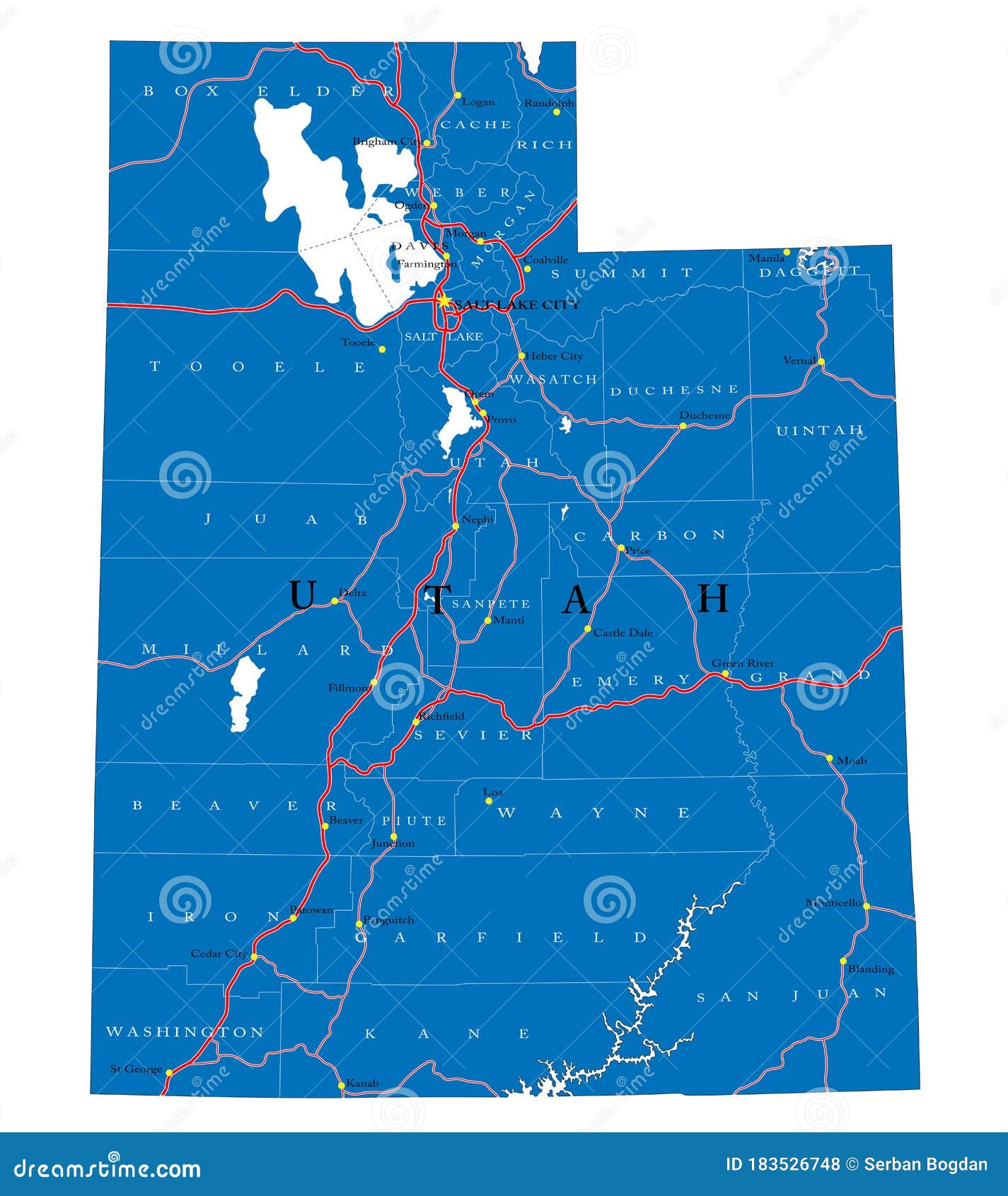
Quite diverse, mainly arid to semi-arid, with major variation owing to elevation, mountains, and latitude. Here's a summary:
-
Overall, dry climate in much of the state: large deserts and semi-arid plateaus
-
Southern Utah (sometimes called “Utah’s Dixie”) has warmer winters, milder climate, more “subtropical” features.
-
Wasatch Mountains and other high elevations get much more precipitation (snow in winter), cooler summers.
-
Temperature ranges: Summers can be very hot in lower valleys and desert areas (often 90-100°F / 32-38°C), while nights cool off. Winters are cold at higher elevations; in valleys, winters are colder but moderated depending on elevation.
-
Precipitation: Low in many areas (especially desert regions), higher in mountain zones. Snowfall is significant in ski regions.
-
Growing season is relatively short in mountainous regions; longer in lower elevation areas (southern Utah, valleys).
-
Climate impacts: Utah is experiencing issues with drought, shrinking of the Great Salt Lake, air quality problems (especially inverted cold air + pollution in valleys) in winter.